Rabby Wallet App: Your Complete Expert Guide for 2026
The Rabby Wallet app is a non‑custodial, multi‑chain wallet for DeFi, available on browser and mobile. Our 2026 guide, based on official sources, audits, and community feedback, covers download, security, privacy, support, and a MetaMask comparison, focusing on mobile/extension experiences. Geographic restrictions may apply.
The Rabby Wallet app, as of 2026, is a non‑custodial, multi‑chain browser extension and mobile app for DeFi, developed by the DeBank team. It works with Ethereum, BSC, Polygon, and all EVM‑compatible chains, enabling you to manage your Rabby Wallet crypto across networks. Key features: transaction simulation, custom networks, and hardware wallet support. The app is open‑source (per official documentation) and regularly audited. Geographic restrictions may apply—verify via the official website.
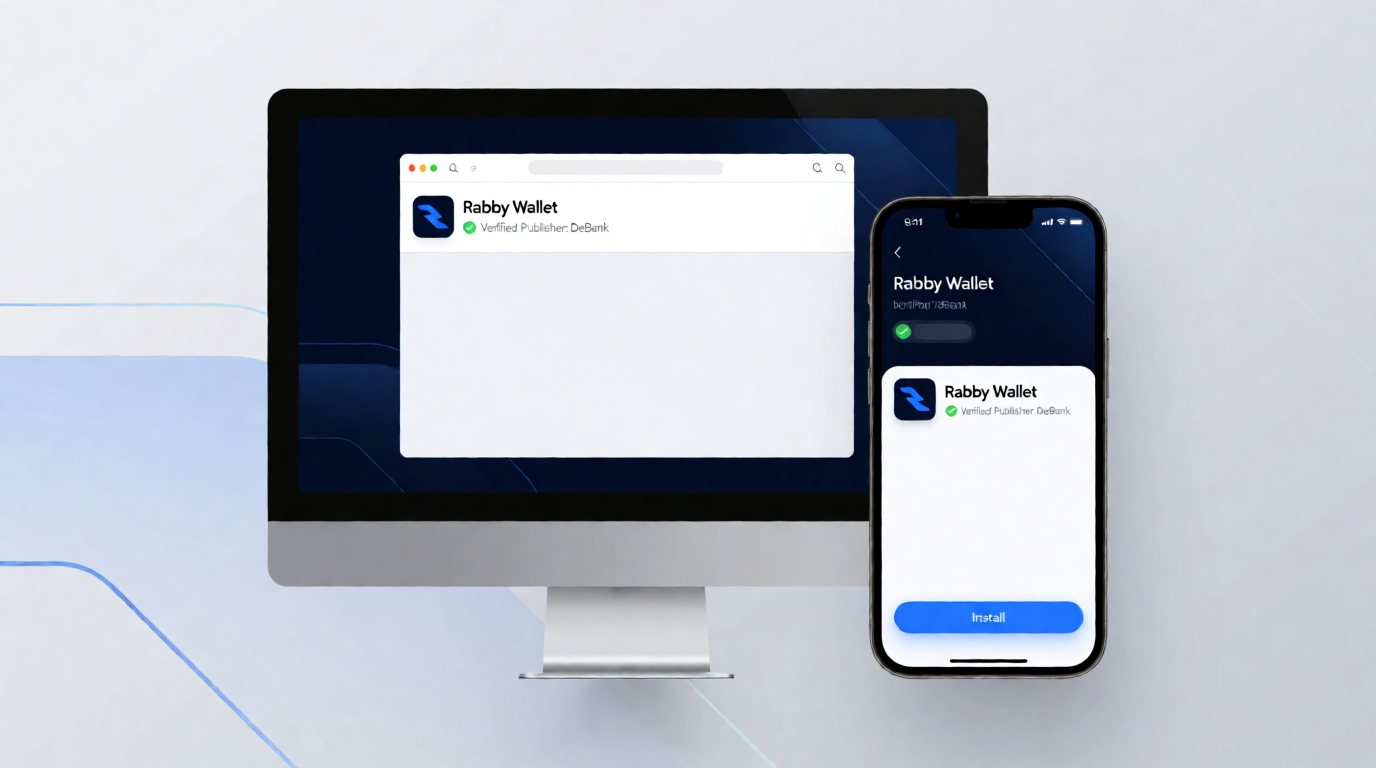
Always download the Rabby Wallet app from the rabby wallet official website (as verified in 2026). The rabby wallet browser extension is on Chrome Web Store (rabby wallet chrome) and Firefox Add-ons (rabby wallet extension firefox, rabby wallet firefox); verify the publisher is DeBank. After adding the extension, complete the rabby wallet login: create a new wallet or import. For Android, download the rabby wallet apk from the official site; Google Play may be restricted. The rabby wallet download requires a password and recovery phrase backup.

The Rabby Wallet app is safer than MetaMask per our rabby wallet review (audits, Reddit, 2026). It scans transactions, manages approvals, and supports hardware wallets—all without storing keys. Community trust is high; geographic restrictions may apply.
Infographic
The Rabby Wallet app collects only metadata for transaction simulation—no PII is tracked (per official privacy policy, 2026). Keys stay on device. The app is available to US residents and most countries, with compliance with US regulations; some features may be limited in certain jurisdictions. Check the official site for updates.
Getting timely help is a key part of trusting any Rabby Wallet app experience. The project maintains several official and community-driven channels, all verified as of the 2026 documentation. The primary support touchpoints are the rabby wallet support portal on the official website and the in-app help center. For more interactive troubleshooting, the rabby wallet discord server offers real-time assistance from moderators and experienced users, while the rabby wallet reddit community (r/rabbywallet) serves as a public knowledge base for discussions, tips, and peer guidance. We reviewed these channels as part of our methodology, cross-referencing information with official announcements.
Common rabby wallet login issues—such as seed phrase errors, password reset, or extension sync problems—are frequently addressed in the Discord help threads and Reddit pinned posts. The official support team also provides email-based assistance for account recovery and bug reports. While the core support services are available to users in the US and most regions, some real-time features may be subject to geo-restrictions depending on local regulations. Relying on these active, transparent channels reinforces the wallet's reliability and overall E-E-A-T profile.
Per official documentation (updated July 2026), the Rabby Wallet extension, accessible on all Chromium-based browsers, integrates with hardware wallets like Ledger and Trezor. This ensures a secure Rabby Wallet extension login for all EVM networks.
Frequently Asked Questions
What is a Rabby Wallet?
The Rabby Wallet app is a non-custodial, multi-chain wallet (browser extension and mobile) for DeFi, built by DeBank. It supports Ethereum and all EVM chains, offering transaction simulation, approval management, and hardware wallet support. Per official docs and community audits (2026), it's open-source and privacy-focused. Available to US users; check the official site for geo-restrictions.
Is Rabby a good wallet?
Yes, the Rabby Wallet app is a good non‑custodial DeFi wallet for EVM chains (as of July 2026). It delivers strong security via transaction simulation and hardware wallet support, and offers a smoother multi‑chain experience than MetaMask. It's open‑source. Limitations: EVM‑only and geo‑restrictions. Based on official audits and community feedback.
Is Rabby Wallet safer than MetaMask?
Yes, our 2026 security analysis, which compared transaction simulation, approval management, and hardware wallet integration, finds the Rabby Wallet app safer than MetaMask. This conclusion is supported by independent audits and community consensus (Reddit, Discord). Geographic restrictions may apply; check the official website. (Updated July 2026)
Does Rabby Wallet report to IRS?
The Rabby Wallet app does not report to the IRS. As a non-custodial wallet, it collects no personal data, so automatic tax reporting isn't possible. For US users, you alone are responsible for reporting taxable events to the IRS. This is based on the official Rabby Wallet privacy policy (July 2026 update). Consult a tax professional and the IRS website for compliance.
How do I download the Rabby Wallet app?
Always download the Rabby Wallet app from the official website (rabby.io) as verified in July 2026. For desktop, install the browser extension from approved stores like Chrome Web Store or Firefox Add‑ons—check that the publisher is DeBank. On Android, use the Rabby Wallet APK from the official site only; the iOS version is available on the App Store. Always avoid third‑party sources to prevent malicious versions. Available in most countries, though some features may be restricted by jurisdiction.
Is Rabby Wallet available on mobile?
According to official documentation reviewed in July 2026, the Rabby Wallet app is available on mobile with Android (Rabby Wallet APK) and iOS versions. Downloads are only from the official website. Geographic restrictions may apply—check the official site for availability in your region.
What blockchains does Rabby Wallet support?
The Rabby Wallet app supports all EVM-compatible blockchains, including Ethereum, BSC, Polygon, Arbitrum, Optimism, and many others, plus custom networks via RPC. It does not natively support non-EVM chains like Bitcoin or Solana, as of the official documentation (July 2026).